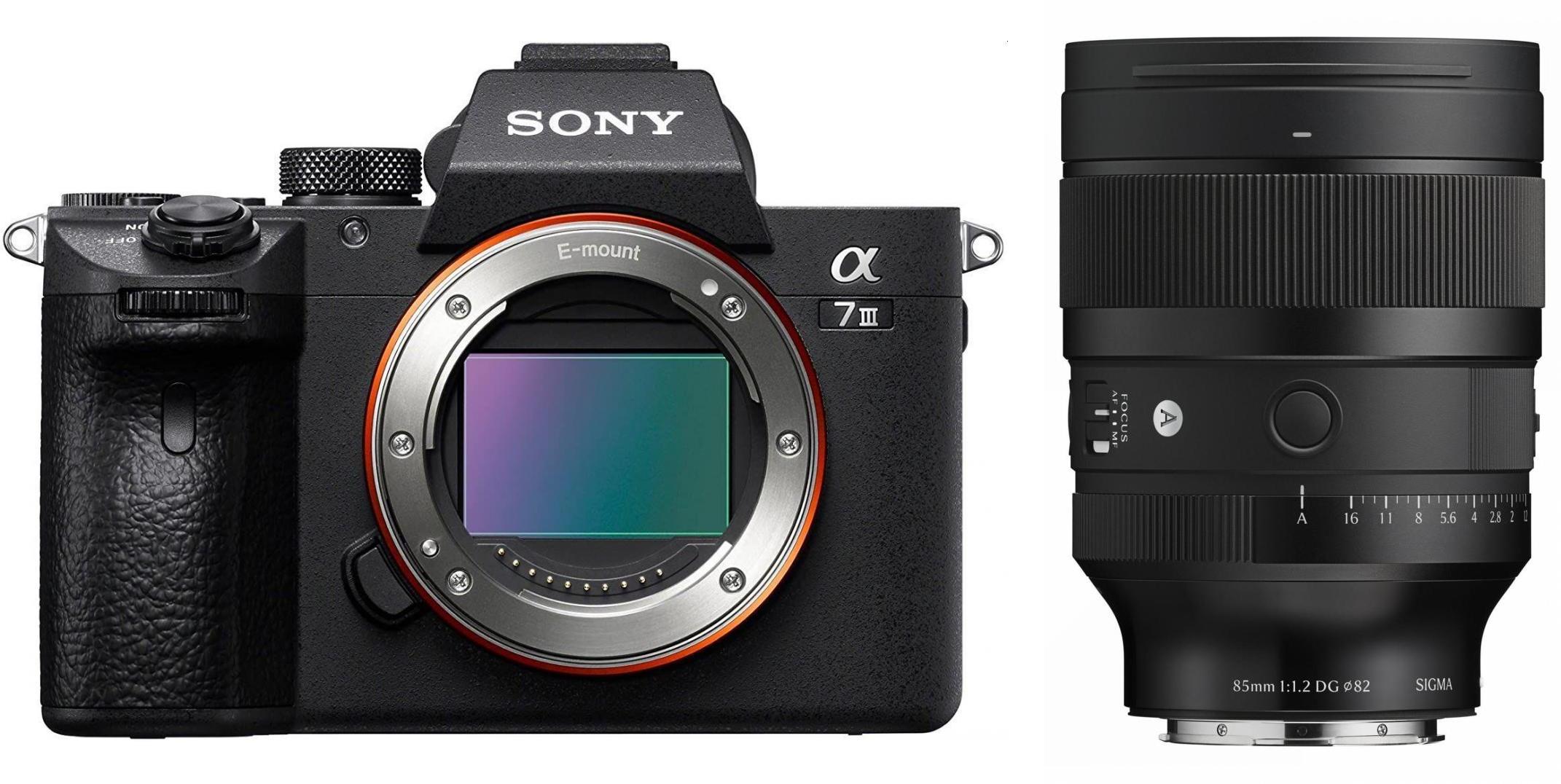
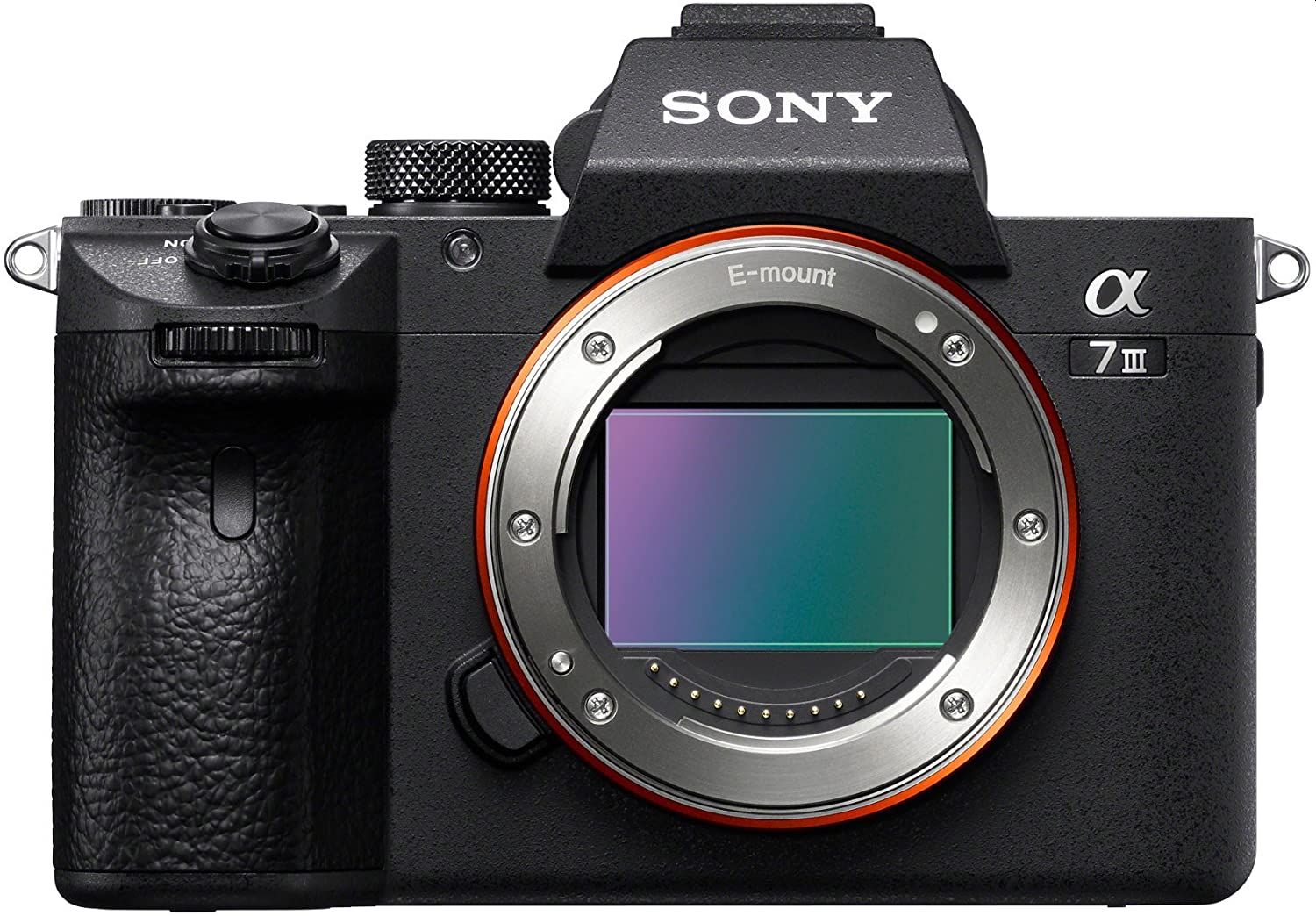
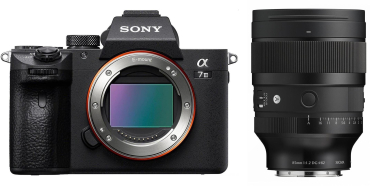
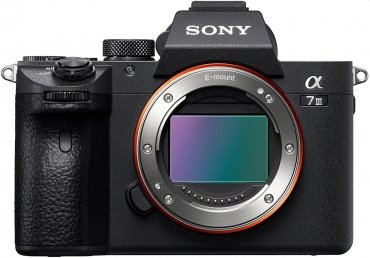
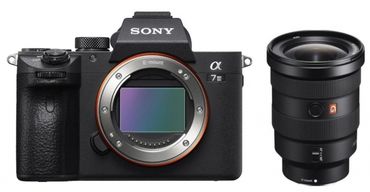
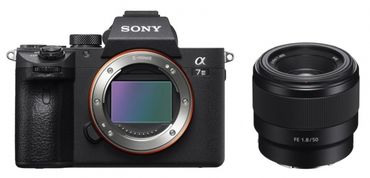
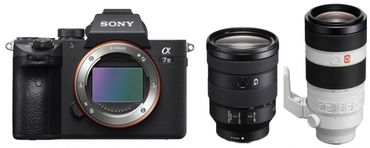
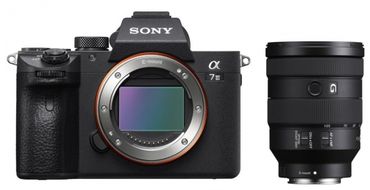
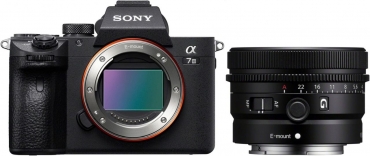
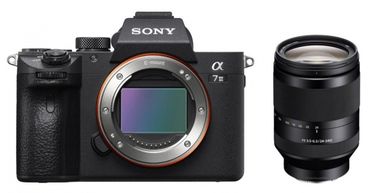
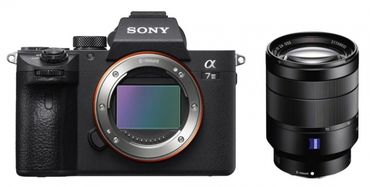
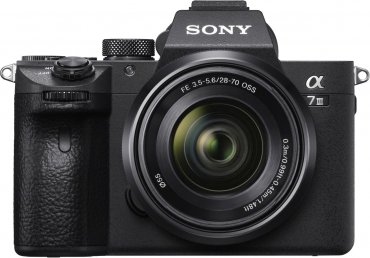
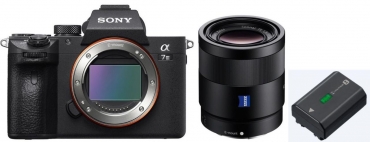
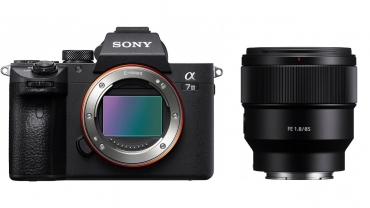
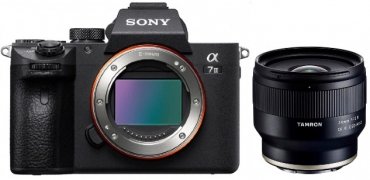
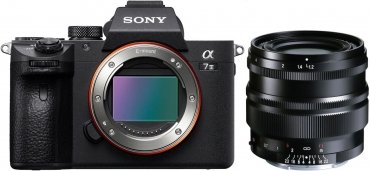
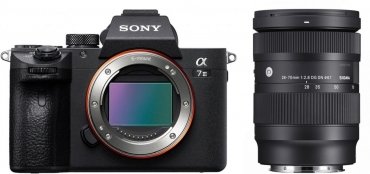
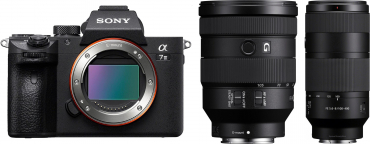
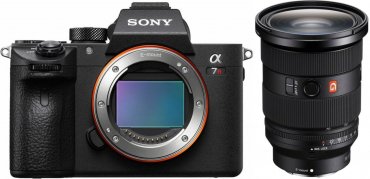
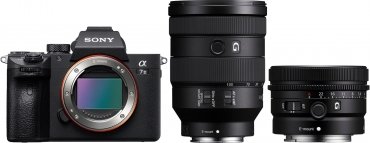
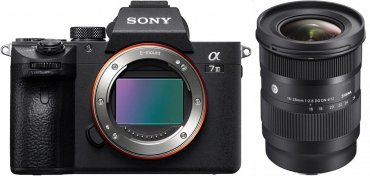
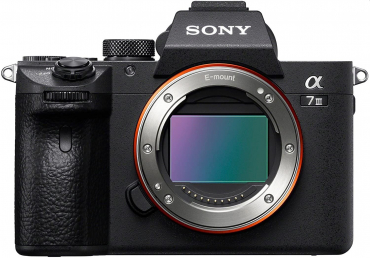
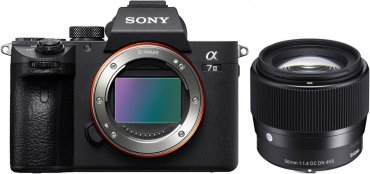
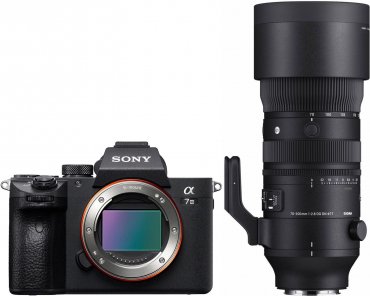
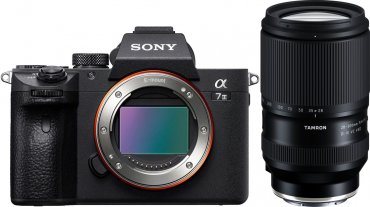
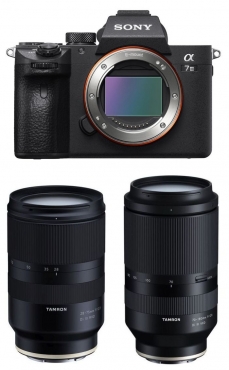
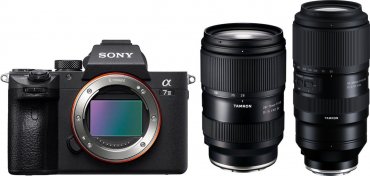
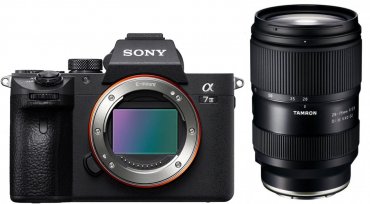
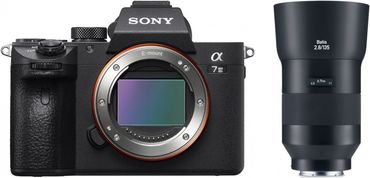
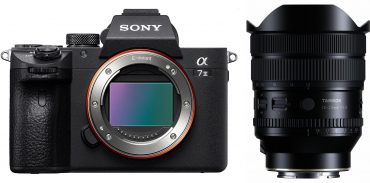
Sony Alpha ILCE-7 III (ILCE7M3) Body
The mirrorless digital camera Sony ILCE-7 III is characterized by its updated sensor design and is a camera suitable for both photo and video applications with a variety of work situations.
The newly developed 24.2 MP Exmor R BSI CMOS sensor and BIONZ X image processor are optimized for improved speed and low-light performance, enabling an impressive continuous shooting rate of 10 frames per second and improved autofocus performance for faster and more reliable subject tracking.
The updated Fast Hybrid AF system uses a combination of 693 phase detection points and 425 contrast detection areas for very fast focus acquisition in almost all lighting conditions and maintains focus on the subject more effectively. In addition to speed and autofocus, the processing improvements also ensure clearer images with greatly reduced noise throughout the sensitivity range of ISO 100-51200, which can even be extended to ISO 50-204800
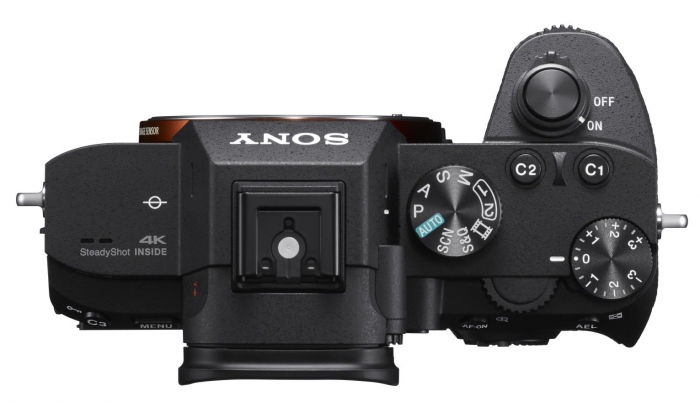
. Video recording capabilities have been enhanced for improved quality when recording UHD 4K video with the full width of the full-frame sensor to minimize moiré and aliasing. Additionally, the a7 III utilizes 5-axis SteadyShot INSIDE sensor-shift image stabilization, which minimizes the occurrence of camera shake by up to 5 stops.
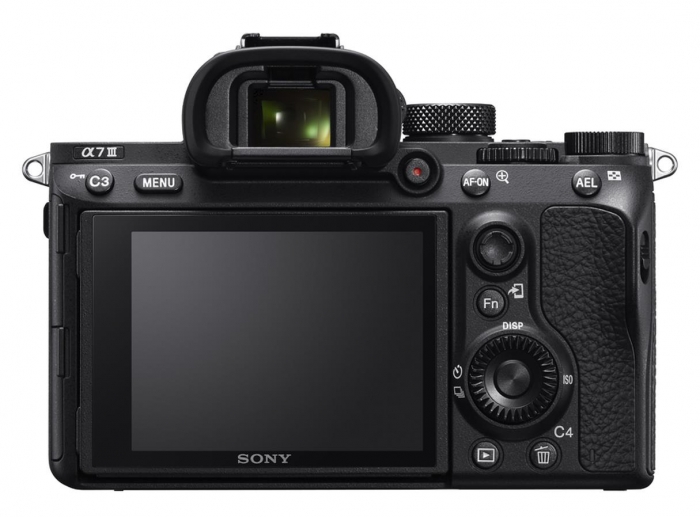
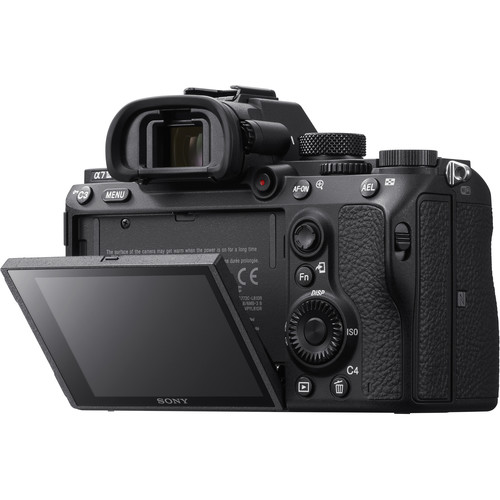
Aside from the imaging system updates, the body design of the Sony a7 III has also been revised to include a rear 3.0" 922k-dot touchscreen LCD, which features a tilting design to better support high and low angle work. A Tru-Finder OLED EVF viewfinder with 2.36 million pixels is responsible for bright and clear subject recognition,
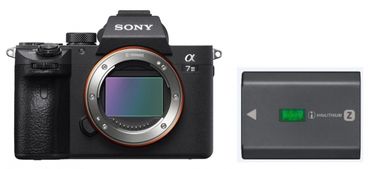
two SD memory card slots are now available for greater shooting flexibility, and a larger NP-FZ100 battery can now also be used to provide up to approximately 710 shots per charge. For use in harsh conditions, the body is made of a robust magnesium alloy, and this and the a7 III's weather sealing make the body resistant to dust and moisture.
24.2MP Exmor R BSI CMOS sensor and BIONZ X image processor
The 24.2-megapixel Exmor R CMOS sensor works with the BIONZ X image processor to deliver high-resolution still images and video while minimizing noise and improving speed. This sensor design works with an on-chip lens design and anti-reflective coating, as well as the elimination of the optical low-pass filter, to improve shooting quality and increase detail.
In addition, a copper wire layer improves data transfer speed for the creation of 14-bit high resolution stills with a native sensitivity of ISO 100-51200, which can be extended to ISO 50-204800. In addition, the internal UHD enables 4K video recording with a wide dynamic range utilizing the full width of the full-frame sensor.
The BIONZ X processor also works in conjunction with a high-speed front-end LSI to realize faster processing times while capturing an impressive 15 stops of dynamic range at low sensitivity levels. The sensor and processor combination also enables fast continuous shooting at up to 10 frames per second at full resolution, for up to 177 consecutive frames and with full-time AF/AE, whether using the mechanical shutter or the electronic shutter. When shooting in Live View mode, a continuous shooting rate of up to 8 frames per second is still possible.
Fast Hybrid AF system
An advanced 4D FOCUS system now uses a combination of 693 phase detection points, covering approximately 93% of the frame, together with 425 contrast detection areas to ensure reliable and fast autofocus and subject tracking. This fast hybrid AF system now achieves twice the focusing speed and more reliable tracking compared to previous a7 models, as well as significantly improved focusing in low light.
The use of phase detection points now enables the use of A-mount lenses via the optional LA-EA3 or LA-EA1 lens adapters with full continuous AF/AE tracking compatibility.
The Sony a7 III offers extensive customizable color and gamma controls, allowing users to adjust gamma, black level, knee, color level and more. Users can also utilize the same S-Log2 gamma curve found on high-end Sony Cinema, which brings up to 1300% more dynamic range to the video signal than the conventional REC709, increasing flexibility in post-production
. HLG (Hybrid Log-Gamma) support is also available for recording within a wide color space in addition to the BT.2020 color space. In addition to S-Log2, S-Log3 is also available to create an effective 14-stop dynamic range with improved grading control in the shadow to mid-tone range of the image.
Body design and integrated Wi-Fi/Bluetooth
The XGA OLED Tru-Finder EVF with a resolution of 2.36 million pixels and 0.78x magnification is responsible for a bright, clear and detailed image. This viewfinder design also enables the use of autofocus in focus magnifier mode as well as improved focusing to support manual focusing. In addition to the EVF, a 3.0" 922k-dot LCD is also mounted on the back of the camera, featuring a touch panel design for intuitive operation and focusing. The screen can also be tilted 107° upwards and 41° downwards to make it easier to work at high and low angles
, while the magnesium alloy chassis guarantees rigidity, durability and stability while keeping the weight down. The lens mount has also been improved to better support heavy lenses and the grip rigidity has been improved to allow for more comfortable one-handed holding.
Weather sealing is used to resist dust and moisture and ensure reliable operation in harsh weather conditions.
With the NP-FZ100 battery, the a7 III has improved battery life and is now rated for approximately 710 shots per charge. Dual SD memory card slots allow flexible file storage and editing and can be configured to partition raw and JPEG files or be used for overflow recording. One of the card slots is designed to support UHS-II memory cards. In addition to a micro USB port, a USB 3.0 Type-C port has been added to enable faster and more reliable tethering support. The USB Type-C port allows the camera to be charged via the host power source while plugged in, and
built-in Wi-Fi enables the Sony a7 III to instantly share images to mobile devices for direct online sharing to social networks, email and cloud. NFC (Near Field Communication) is also supported, enabling a one-touch connection between the camera and compatible mobile devices; no complex set-up is required. Once connected, the connected mobile device can also display a live image on its screen and remotely control the camera shutter. Bluetooth connectivity allows location data to be captured.
Other camera features
The "Ratings" feature allows you to assign values from 1-5 stars to images in the camera for faster editing and sorting during post-processing at home.
An advanced 1200-zone evaluative metering sensor delivers consistent and accurate results with multi-segment, center-weighted or spot metering. Highlight and Average metering modes help prevent blow-out highlights and ensure stable automatic exposure.
Anti-flicker shooting automatically detects and delays the shutter release to minimize the flicker effect for more consistent results in still images.
Housing design and integrated Wi-Fi/Bluetooth
- The XGA OLED Tru-Finder EVF has a resolution of 2.36m and 0.78x magnification for bright, clear and detailed viewing.
- This viewfinder design also enables the use of autofocus in focus magnifier mode as well as improved focus tracking for the benefit of manual focus operation.
- In addition to the EVF, a 3.0" LCD display with 922k dot is available on the rear, featuring a touch panel design for intuitive operation and focus control.
- The screen can also be tilted 107° upwards and 41° downwards, making it easier to work from high and low angles.
- The magnesium alloy body provides rigidity, durability and stability at a low weight,
- the lens mount has also been improved to better support heavy lenses and the grip rigidity has been improved for a more comfortable hand position.
- A weather seal protects the camera from dust and moisture, ensuring reliable operation in harsh weather conditions.
- Using the NP-FZ100 battery, the a7 III has improved battery life and is now rated for approximately 710 shots per charge.
- Two SD memory card slots allow for flexible file storage and handling.
- They can be configured to partition raw and JPEG files or be used for overflow shooting.
- One of the card slots is designed to support UHS-II memory cards.
- A USB 3.0 Type-C port has been added in addition to a micro USB port to provide faster and more reliable tethering support.
- The USB Type-C port allows the camera to be charged from the host power source while plugged in, and
- thanks to the built-in Wi-Fi connection, the a7 III can instantly transfer images to mobile devices for direct online sharing on social networks, email or cloud storage.
- NFC (Near Field Communication) is also supported, enabling a one-touch connection between the camera and compatible mobile devices; no complex setup is required. Once connected, the linked mobile device can also display a live image on its screen and remotely control the camera's shutter button.
- The Bluetooth connection allows location data to be captured.
Further functions
- The rating function allows you to assign stars from 1 to 5 to the images in the camera for faster editing and sorting in post-processing at home.
- The advanced 1200-zone evaluative metering sensor delivers consistent and accurate results when using multi-segment, center-weighted or spot metering
- , while the highlight and average modes help to avoid overexposed highlights and ensure stable automatic exposure respectively.
- The anti-flicker function automatically detects and times the shutter release to minimize the flicker effect for more consistent photo results.
- Image Effect Modes: Posterization (Color), Posterization (B/W), Pop Color, Retro Photo, Partial Color (R/G/B/Y), High Contrast Monochrome, Toy Camera (Normal/Cool/Warm/Green/Magenta) and Soft High-Key.
- Creative Style Modes: Standard, Vivid, Neutral, Clear, Deep, Bright, Portrait, Landscape, Sunset, Night Scene, Autumn Leaves, Black & White, Sepia, Style Box (1-6), (Contrast (-3 to +3 levels), Saturation (-3 to +3 levels), Sharpness (-3 to +3 levels).
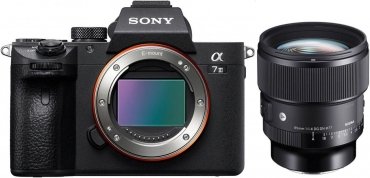
Sigma 85mm f/1.2 DG Art E-Mount
Outstanding Resolution
In addition to two SLD glass elements, high-anomalous-dispersion glass is also used to suppress, as much as possible, the axial chromatic aberration characteristic of wide-aperture lenses. Aspherical lens elements also specifically correct spherical aberration and sagittal coma. The lens delivers impressive high resolution even at wide-open aperture, fully showcasing the image quality that only an f/1.2 aperture can provide. The Sigma 85mm F1.2 DG Art captures even the slightest emotion in portraits and every detail of the subject, thereby elevating the quality of both photos and videos to a new level.
Beautiful bokeh that makes the subject stand out
The combination of a large F1.2 aperture and a medium telephoto focal length of 85mm enables an extremely shallow depth of field and beautiful, soft bokeh. This natural background blur, with minimized chromatic aberrations and ghosting, makes the subject stand out particularly impressively. The Sigma 85mm F1.2 DG Art lends portraits and video footage impressive spatial depth and an intense sense of immersion in the scene. Thanks to the use of a 13-blade aperture, the bokeh remains nearly circular even when stopped down.
Optical Design to Minimize Flares and Ghosting
Thanks to state-of-the-art simulation technology that modeled all possible lighting conditions during the development phase of the Sigma 85mm F1.2 DG Art, flares and ghosting have been virtually eliminated. As a result, the lens delivers clear and sharp results under all conditions.
Extremely compact, redefining the portability of an 85mm f/1.2 lens
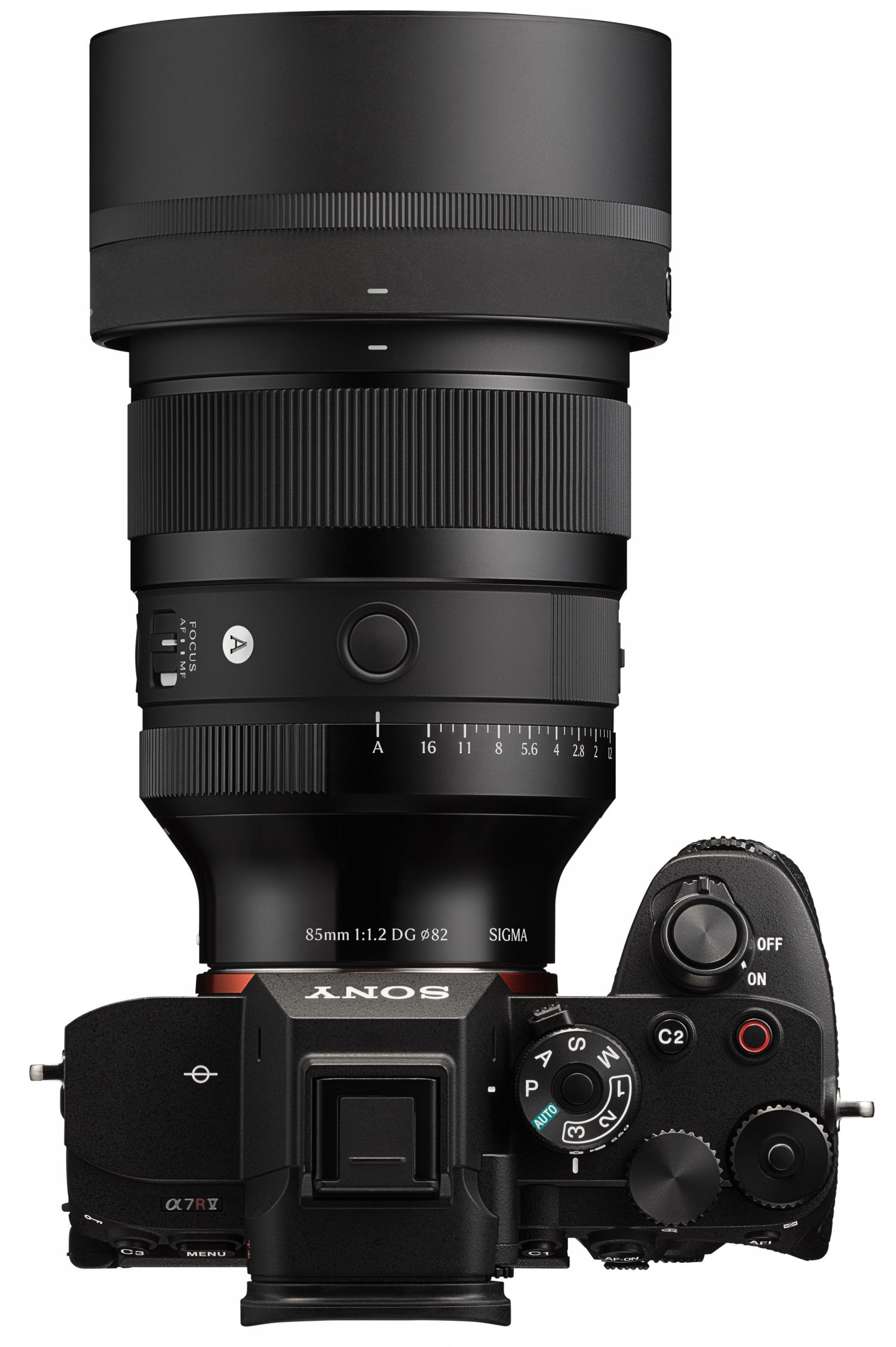
The smallest and lightest 85mm f/1.2 in its class
Thanks to the effective arrangement of aspherical lens elements within the focus groups, the number of lens elements in the focus unit has been significantly reduced. Despite the integration of a complex floating mechanism,a precise mechanical design reduced to the absolute minimum keeps the weightdownto just905g1, making this lens the smallest and lightest in its class among 85mm f/1.2 lenses2. The Sigma 85mm F1.2 DG Art is comfortable to use even during long shoots or in situations that require mobility, thereby significantly improving flexibility on set.
*1 This figure refers to the lens with an L-mount.
*2 Among 85mm f/1.2 AF interchangeable lenses for full-frame mirrorless cameras (according to Sigma research, as of September 2026).
Fast
and
Quiet
Autofocus with Dual HLA
The fast and quiet autofocus provided by the Dual HLA (High-response Linear Actuator) drive ensures reliable subject tracking with the Sigma 85mm F1.2 DG Art for both photos and videos. Even with the shallow depth of field at the maximum aperture of F1.2, it captures the subject precisely, enabling smooth and accurate shots in any situation.
The hallmark of a creative tool: the high build quality of the Sigma Art series
By using highly precise components made from lightweight yet highly stable materials such as TSC*, the Sigma 85mm F1.2 DG Art offers the high rigidity and durability typical of the Art series without compromising on portability. As a result, it features the high-quality craftsmanship that characterizes a reliable photographic tool designed for long-term use.
*TSC (Thermally-Stable-Composite) is a type of polycarbonate with a thermal expansion rate similar to that of aluminum. It has a high affinity for metal components, which contributes to high-quality product manufacturing.
Comprehensive features and build quality that meet the demands of professional use
Minimized focus breathing
Thanks to the optimized arrangement of the focus group and the aspherical design, the Sigma 85mm F1.2 DG Art effectively suppresses focus breathing. As a result, the angle of view remains virtually unchanged during focusing, ensuring very natural-looking focus tracking during video recording.
Various Shooting and Assist Functions
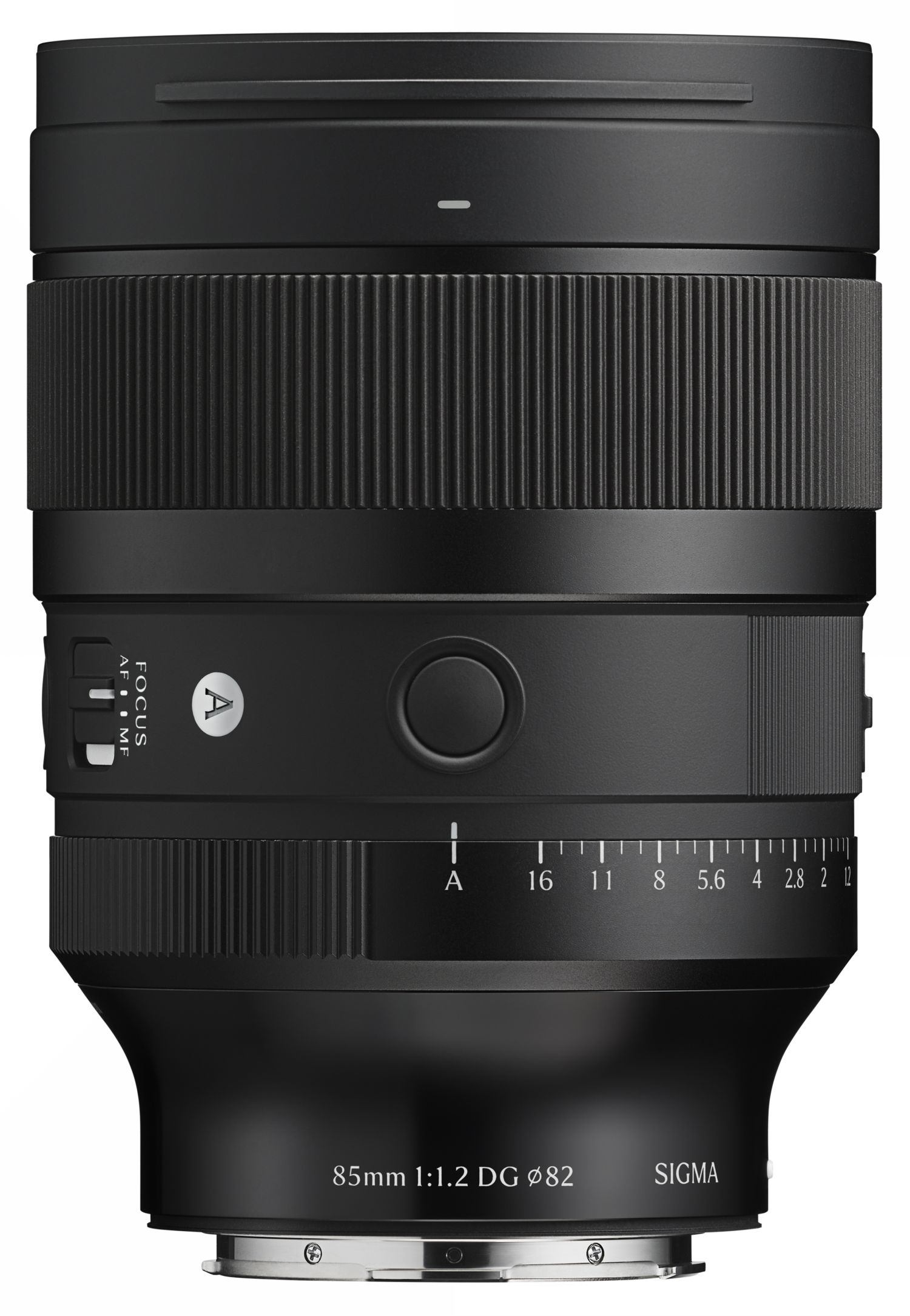
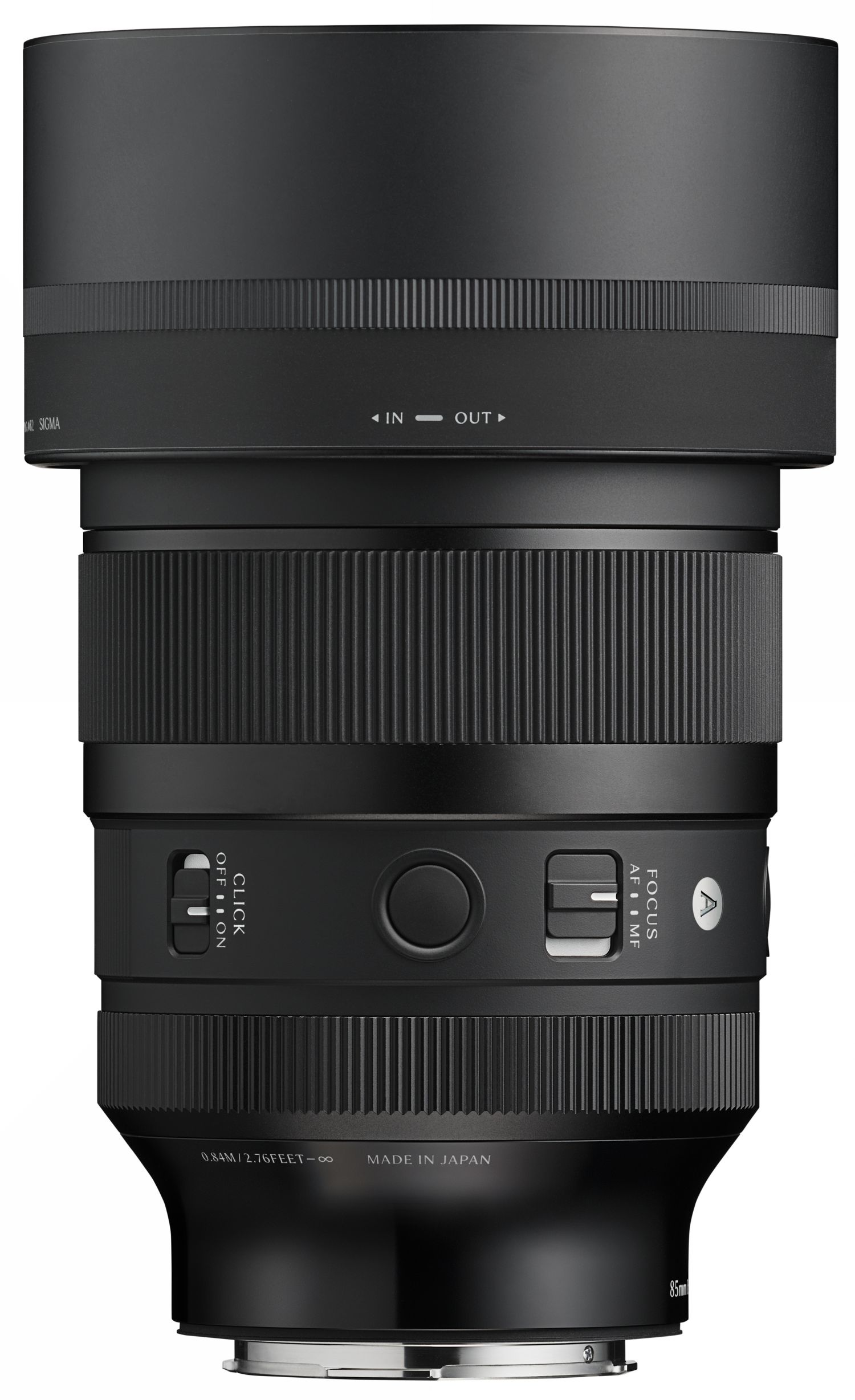
The Sigma 85mm F1.2 DG Art features two AFL buttons to which various functions can be assigned via the camera menu on compatible cameras. In addition to the aperture ring, the lens is equipped with a lock switch to lock the aperture ring* and a click function that allows you to turn the aperture ring’s click stops on and off.
*If you press the lock switch while the aperture ring is set to A, the aperture ring is locked in the A position. If the lock switch is pressed while the aperture ring is set to an aperture other than A, the aperture ring can be rotated back and forth between the maximum and minimum apertures.
Dust-proof, splash-proof* construction and water- and oil-repellent coating
In addition to the dust- and splash-resistant housing*, the front element of the Sigma 85mm F1.2 DG Art features a water- and oil-repellent coating. This allows you to shoot with confidence even under challenging shooting conditions.
*The lens is dust- and splash-resistant, but not waterproof. Be careful not to allow the lens to come into full contact with water. Water inside a lens can cause significant damage and may even render it irreparable.
Sigma’s F1.2 series is now complete and includes a wide-angle, a standard, and a medium telephoto lens. With the introduction of this lens, Sigma’s F1.2 Art series is now complete and includes the 35mm F1.2 DG II Art, the 50mm F1.2 DG DN Art, and the new 85mm F1.2 DG Art. All three lenses deliver outstanding optical performance across the entire focus range and high resolution even at wide-open apertures. They offer fast, high-precision autofocus thanks to Dual-HLA—all in a compact and lightweight body that ranks among the best in its class. Built on the advanced design and manufacturing technologies that Sigma has developed over the years, these three uncompromising lenses produce images with impressive presence and spatial depth, lending even greater expressiveness to creative work.

 4.86/5 — More than 56,500 reviews




















































Simply subscribe and receive weekly updates and offers on photography and video equipment.